
What Are Those Little Offerings?
Small trays of flowers beside a doorway can tell you something about everyday Bali. A closer look at canang sari and the care behind them.
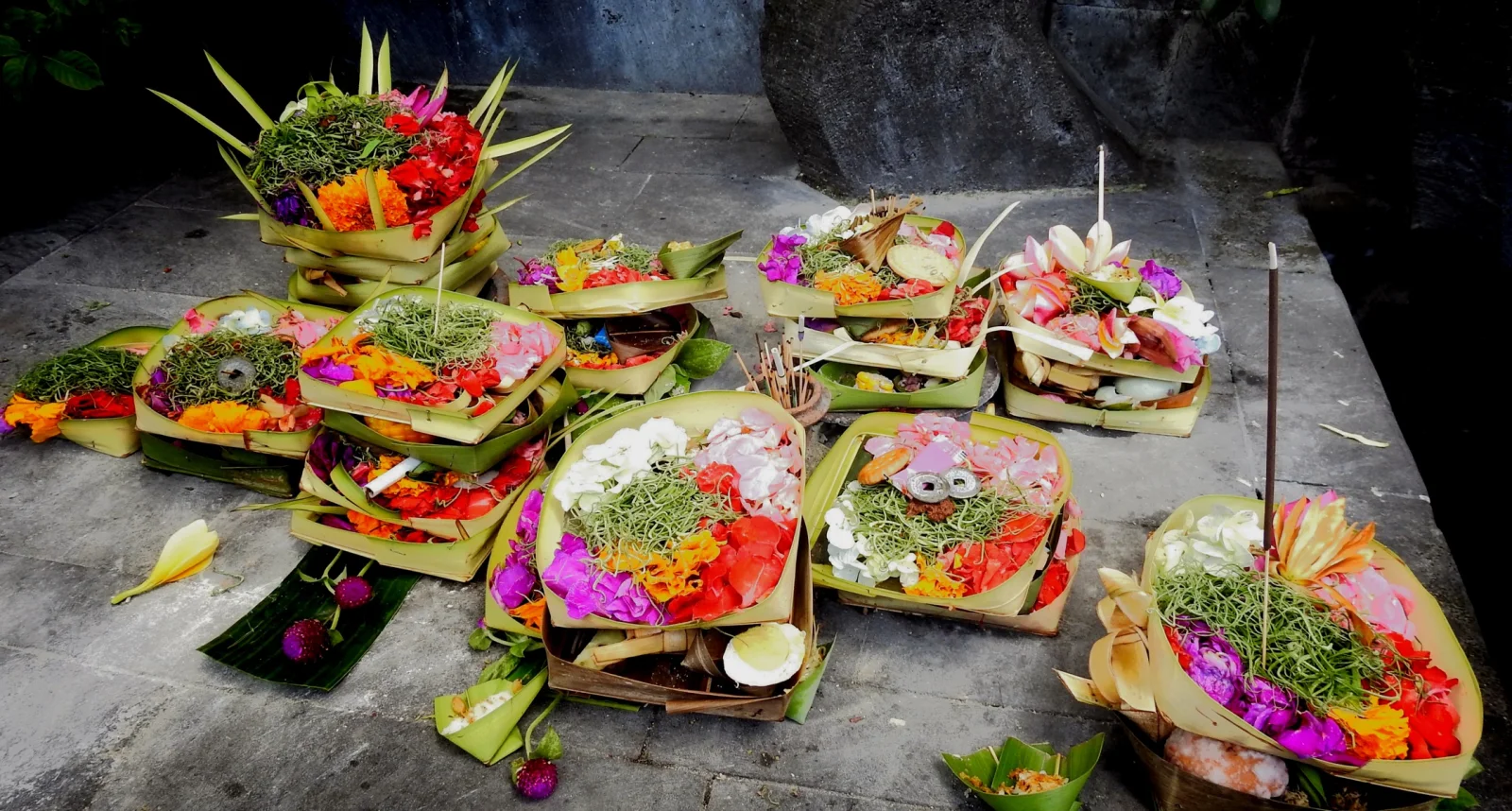
You might notice one as you leave a shop. A small tray made from leaves, a handful of bright flowers and perhaps a stick of incense, placed close to the doorway. A little further along, there is another.
Once you start looking, these offerings become a familiar part of a visit to Bali. You see them around homes and places of worship, as well as beside the streets you use to get somewhere else.
Many of the small flower offerings you notice are called canang sari. Knowing a little about them can change the way you look at what is happening around you.
A way of giving thanks
Canang sari are part of daily worship for Balinese Hindus. They are offerings to Sang Hyang Widhi Wasa, God, made as an expression of thanks. The time and care involved in preparing them are part of that act of giving.
They belong to the wider tradition of banten, or offerings. There are different kinds of canang, and a small tray may also be one part of a larger arrangement. The explanation from Kemenag Buleleng gives some background to their place in Balinese Hindu worship.
For a visitor, it is enough to begin with that understanding. Someone has taken the time to prepare and place what you are looking at, and it has meaning for them.
Look at the small details
In the photograph above, you can see folded leaf trays, colourful flowers and incense. Look more closely and you will notice how many separate pieces have been brought together.
You may see other items among offerings during your stay, and arrangements can look quite different from one another. A photograph is a good reason to be curious, but it will only tell you part of the story.
If you would like to know more, ask a local person when they have time to talk. There may be a name for a particular arrangement or a reason for where it has been placed. Let them explain it in their own way.
Give them a little space
When an offering is on the ground, walk around it and leave it where it has been placed. Look down as you pass doorways and shrines, particularly when you are distracted by your phone or looking for directions.
This is also part of Indonesia's guidance for respectful cultural travel: be aware of offerings and avoid disturbing them.
If someone is praying, give them room to continue. Before taking a photograph of a person or a ceremony, ask permission and follow the guidance of the people there. You can take an interest without needing to turn every moment into a picture.
Something to notice along the way
A Bali holiday often comes with a list of places to visit. Canang sari give you something to notice between those bigger plans: outside a doorway, near a shrine or along a street you might otherwise hurry through.
If you are staying on the Tabanan coast at Villa Lux Bali, leave a little time to learn about the everyday life around the places you visit. A short conversation can stay with you just as much as a famous view.
For another small introduction to everyday Bali, our story about jaje laklak looks at a traditional snack you may come across during your stay.
Photo: Canang sari offerings in Bali, by Dennis Sylvester Hurd / Wikimedia Commons, CC0 1.0. Display versions are resized and may be cropped.
