
A Side of Bali You Haven’t Tasted Yet
Discovering jaje laklak, Bali’s traditional rice pancakes, and the different ways you might find them around the island.
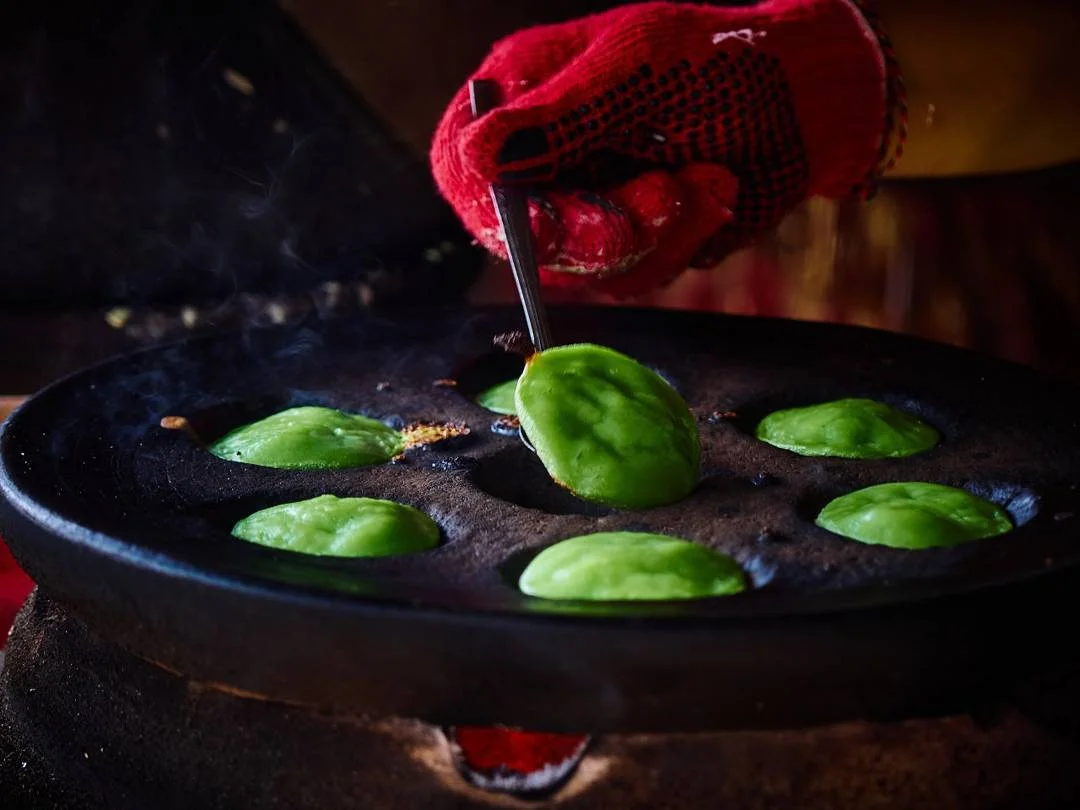
Discovering laklak, Bali’s traditional rice pancakes.
The small green cakes in this photograph are jaje laklak. One is being lifted from the cooking mould while the others sit over the heat. Baloma took the photograph in Denpasar, where this Buleleng-style snack was being made.
If you have spent your Bali holiday choosing between nasi goreng, seafood and café breakfasts, laklak gives you something else to look for. It is a small snack, often served with grated coconut and palm sugar, and a good reason to stop at a stall you might otherwise walk past.
Getting to know jaje laklak
Laklak is a traditional Balinese cake made with rice flour. Calling it a Balinese rice pancake is a useful introduction, though the small, rounded versions have their own shape and texture.
You will see white laklak as well as green ones. Leaves such as pandan or suji are used in some recipes, but the ingredients vary between makers. The colour alone does not tell you exactly what has gone into the batter.
Traditional preparation uses a cooking mould, often made from clay. Watching the cakes cook is part of the interest: the batter goes in, the surface slowly sets, and each cake is lifted out when it is ready. The photograph captures just that moment.
Grated coconut and liquid palm sugar are familiar accompaniments. If you are ordering for the first time, try a small portion and see how the vendor serves it. Laklak also makes an easy companion to a cup of tea or coffee.
Different kitchens, different laklak
There is more than one version of jaje laklak in Bali. The small green cakes in the photograph are one example, and you may come across different colours, sizes and toppings elsewhere on the island.
In Tabanan, there is also laklak biu, a thinner version made with banana and served with coconut. It looks quite different from the little cakes in a round mould. Finding another version is a reason to try laklak again, even if you have already tasted it somewhere else.
Ask what is being made and how it is usually served. That short conversation can tell you more than trying to match every snack to a photograph.
Where to look for it
Traditional morning markets are a useful place to start. Look for stalls selling Balinese cakes and snacks, often called jaje, and ask whether they have laklak that day. Availability depends on the market and the seller, so keep it as something to look for rather than the only purpose of your outing.
If you are staying on the Tabanan coast, a market visit can fit into a morning spent exploring the area. Ask locally which nearby market has traditional snack stalls, then leave a little time to browse. A photo of laklak may help if the name is unfamiliar.
You do not need a long food itinerary to discover something new. Sometimes it starts with noticing what is cooking, asking a question, and ordering a few pieces to share.
For more ideas during your stay, explore the Villa Lux Journal. If you are planning a holiday on the Tabanan coast, you can also read about Villa Lux Bali on Pasut Beach and ask us about your dates.
Cover photograph: Buleleng-style jaje laklak being cooked in Denpasar. Photograph by Baloma.